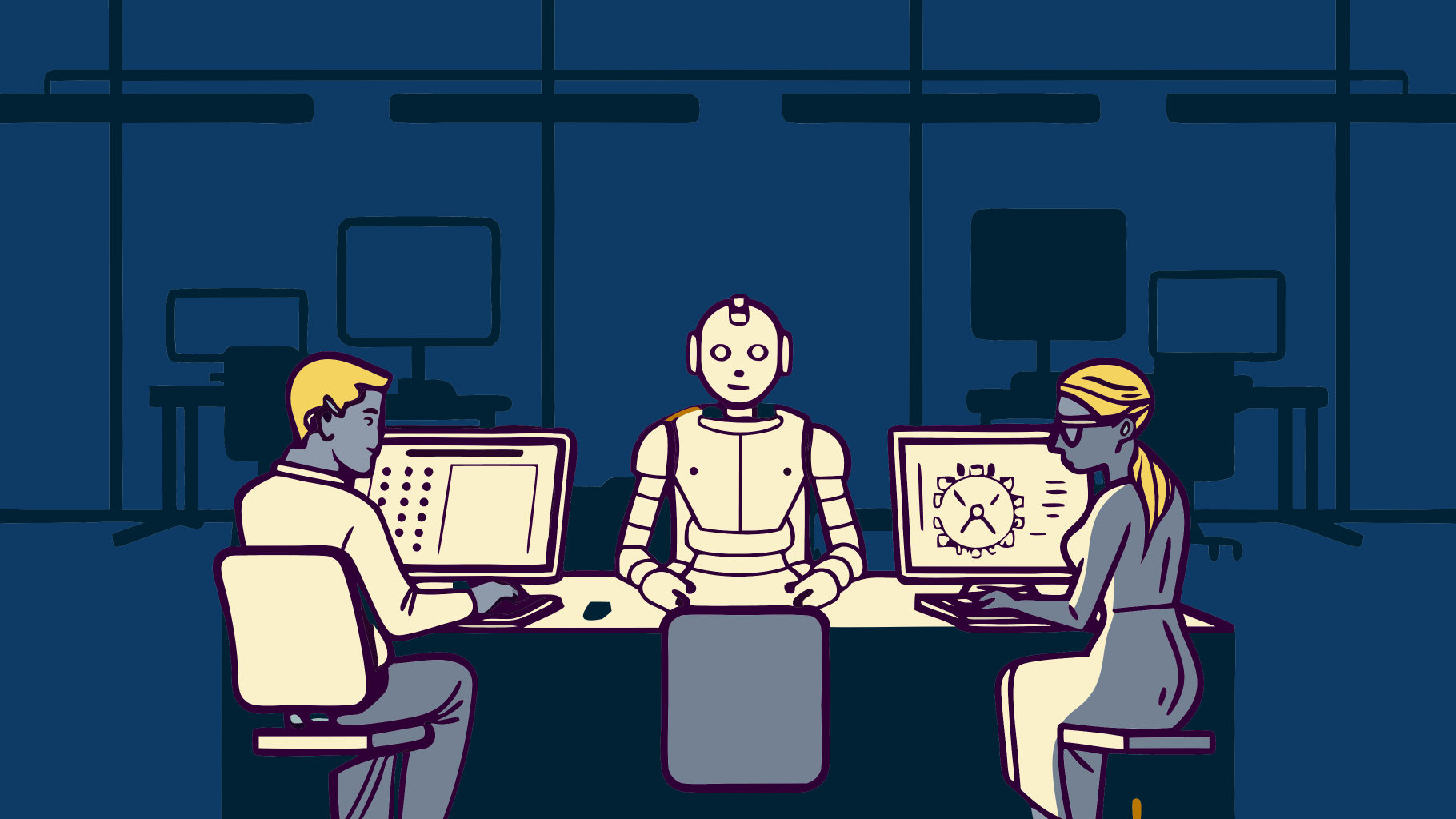
Moving from Trust to Application: Why Hybrid Intelligence Needs Clear Use Cases
Welcome back to Two-for-One, our newsletter format where we tackle a pressing issue and provide two grounded, practical solutions. In a previous edition, we explored how to build trust in hybrid intelligence—a system that blends human expertise with AI-driven analysis. This time, we move one step further: how can that trust be operationalized in everyday workflows, specifically in business process management (BPM)?
While many organizations have made promising strides in overcoming the trust gap—by embracing explainable AI and robust governance frameworks—there’s now a new challenge: How can teams actually use hybrid intelligence in business processes without adding more friction, confusion, or inefficiency?
The Challenge: A Trustworthy System That Still Lacks Use
Gaining confidence in hybrid intelligence is a vital first milestone. But trust alone doesn’t ensure value creation. In many BPM contexts, employees are still unclear where AI’s responsibility ends and where their own begins. Who makes which decisions? At what point should AI insights be acted upon, questioned, or ignored?
Take, for instance, a procurement process. AI may flag anomalies in supplier pricing trends, but who is ultimately responsible for acting on that information? If no clear boundaries are in place, these AI insights risk being sidelined or overridden entirely—often because users simply don’t know whether or how to engage with them.
This ambiguity can erode confidence, stall innovation, and prevent meaningful impact—even when the technology is sound and the data reliable.
Two Practical Solutions for Integrating Hybrid Intelligence in BPM
Clarifying Hybrid Process Roles: Defining Who Does What
Description:
For hybrid intelligence to work in BPM, organizations must clearly delineate roles between human agents and AI systems. This means identifying which process steps are best handled by AI—like high-frequency data analysis—and which require human oversight, such as ethical evaluations or stakeholder communication.
Benefits:
- Reduces confusion and hesitation in decision-making
- Avoids redundant or conflicting actions
- Improves auditability, compliance, and accountability
Long-Term Perspective:
Establishing structured hybrid roles creates a scalable foundation for more advanced BPM maturity. It allows companies to standardize collaboration between human and machine without micromanagement or loss of agility. The result? A more predictable, efficient, and compliant process landscape.
Deploying AI as an Early Warning System for Processes
Description:
Rather than attempting to replace human judgment, AI should be embedded as a predictive monitoring layer—a mechanism that flags deviations, inefficiencies, or risk signals within processes before they escalate. The human role here is to evaluate these signals, apply contextual understanding, and initiate appropriate responses.
Benefits:
- Early intervention reduces costly delays or quality issues
- Enables agile responses without constant human oversight
- Merges AI’s pattern recognition with human critical thinking
Long-Term Perspective:
By functioning as a hybrid early warning system, AI doesn’t just detect anomalies—it strengthens operational resilience. Over time, organizations can refine these alerts using feedback loops, making the system smarter and more aligned with business realities.
Food for Thought: Navigating the Gray Areas
As with all transformations, introducing hybrid intelligence into BPM raises thoughtful questions:
- Delegation Criteria: What principles should guide which tasks are assigned to AI and which to humans?
- Signal Fatigue: How can we ensure that AI alerts remain actionable and don’t overwhelm users?
- Operative Involvement: What’s the best way to include frontline employees in shaping and validating hybrid workflows?
Conclusion: From Trust to Transformation
Trust in hybrid intelligence is necessary—but insufficient. The real value emerges when that trust translates into structured collaboration between humans and AI, embedded within actual business processes.
Companies that move from exploration to implementation—through defined hybrid roles and proactive monitoring systems—stand to gain not just operational efficiencies but also cultural alignment and digital readiness.
Want to explore how to make your processes hybrid-ready? Reach out to us for a conversation about your next BPM milestone.
What is hybrid intelligence in business process management?
Hybrid intelligence in BPM refers to the strategic collaboration between human decision-makers and AI systems to optimize business workflows. Humans bring judgment, ethics, and context; AI contributes speed, analysis, and pattern recognition.
How can hybrid roles be defined in BPM?
Hybrid roles are defined by mapping specific process tasks to either AI or human responsibility based on factors like complexity, frequency, and ethical implications. Clear role definition improves efficiency and trust.
Why use AI as an early warning system in BPM?
AI can monitor data streams in real time to detect anomalies or risk factors early. When paired with human evaluation, this helps prevent escalation and improves process responsiveness.
What challenges exist in applying hybrid intelligence to real processes?
The main challenges include unclear decision boundaries, user resistance, and overwhelming alert systems. These can be mitigated through training, feedback loops, and governance frameworks.
Can hybrid intelligence help with compliance?
Yes. Hybrid systems that combine transparent AI insights with human oversight can improve audit trails, regulatory alignment, and overall compliance in BPM.